
In this article
- What Mold Is, and Why Moisture Is the Real Problem
- Signs You May Have a Mold Problem
- What Happens During a Professional Mold Assessment
- Mold Assessment vs. Mold Remediation: Why an Independent Assessor Matters
- Post-Remediation Verification: Don’t Skip the Clearance
- When to Call a Mold Assessor
- Mold Assessments in Dutchess, Putnam and Westchester Counties
A musty smell in the basement that never quite goes away. A brown stain spreading across a ceiling. A pipe that leaked inside a wall for who knows how long. When you suspect mold, the real questions aren’t “how do I kill it?” They’re “how big is this, where is the water coming from, and what actually needs to happen next?”
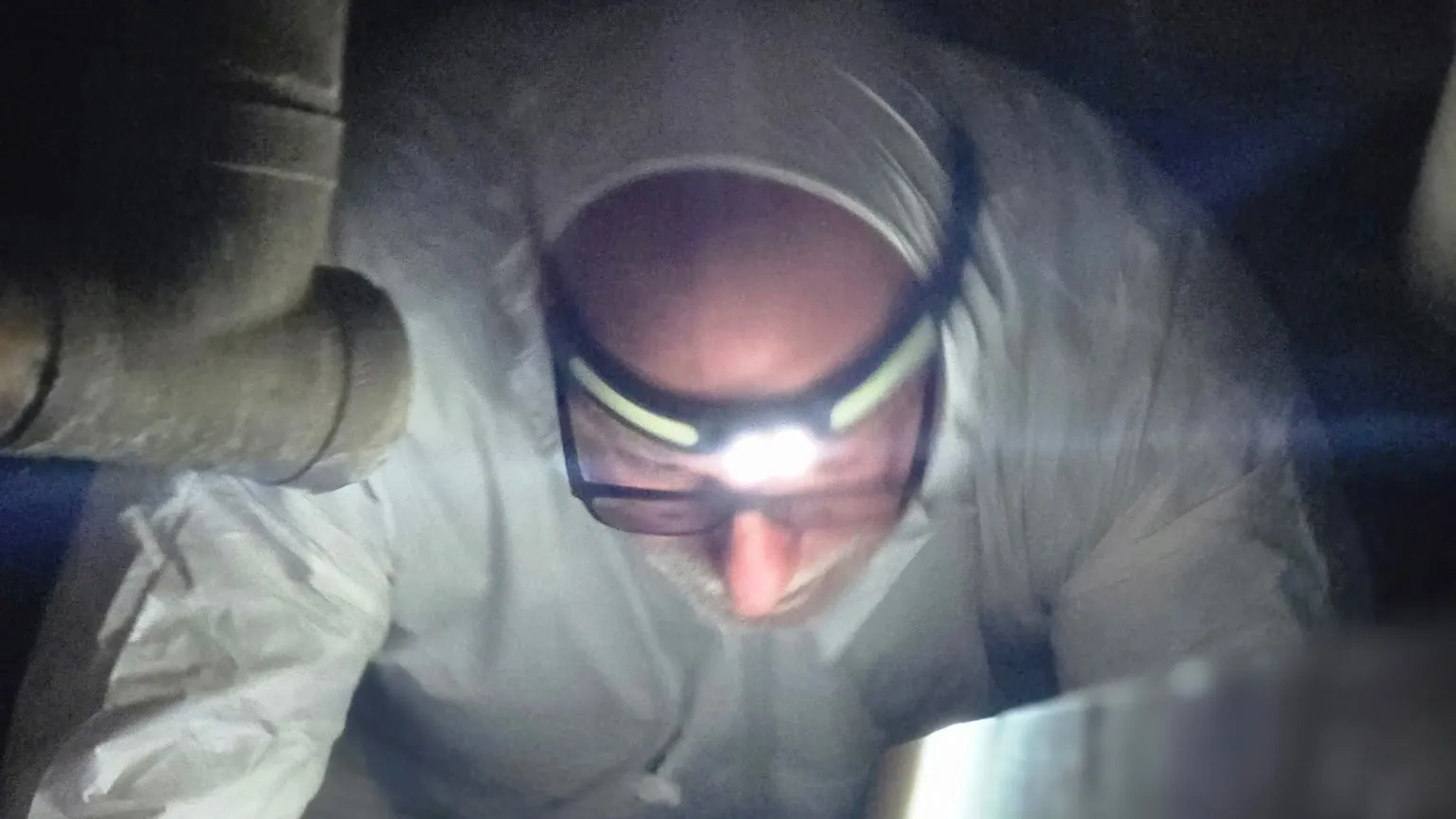
Those are the questions a mold assessment answers. A mold assessment is an inspection of your home by a licensed mold assessor to find mold, the moisture feeding it and the conditions that let it grow, and then to spell out what it will take to fix the problem.
Eagle Eye Home Inspection is licensed by New York State to perform mold assessments, and we have many years of experience doing exactly this work. Here’s one thing we don’t do: mold remediation. We don’t remove mold, and we don’t sell cleanup. That’s deliberate, and by the end of this guide you’ll see why an independent assessment matters, especially here in New York.
What Mold Is, and Why Moisture Is the Real Problem
Mold is a fungus and a natural part of the environment. Its spores are in the air outdoors and, in small amounts, in every home. You can’t keep every spore out of your house, and you don’t need to.
What turns ordinary spores into a mold problem is water. Mold needs moisture to grow, and the EPA’s guide to mold, moisture and your home sums it up simply: the key to mold control is moisture control. Common moisture sources in a house include:
- Roof leaks and indoor plumbing leaks
- Outdoor drainage problems, such as clogged gutters
- Damp basements and crawl spaces
- Steam from bathrooms and kitchens that isn’t vented outside
- Condensation on cool surfaces like pipes, windows and walls
- A clothes dryer venting indoors
This is why cleaning alone so often fails. The New York State Department of Labor notes that unless the underlying water or moisture source is corrected first, mold will likely grow back.
Why bleach isn’t the fix
Spraying bleach on a moldy wall feels like progress, but it doesn’t solve anything if that wall keeps getting wet. The EPA does not recommend chlorine bleach or other biocides as a routine part of mold cleanup, and it points out that dead mold can still cause allergic reactions in some people. Mold has to be removed, not just killed, and the moisture has to stop.
Where mold likes to hide
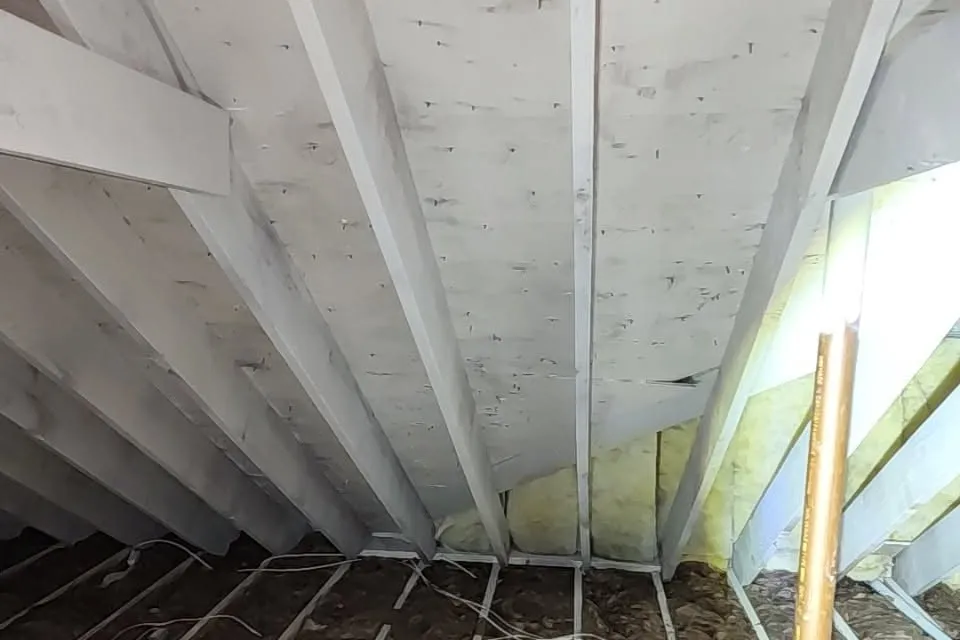
Some mold is obvious. A lot of it isn’t. According to the EPA, mold can hide on the back side of drywall, wallpaper or paneling, on the top side of ceiling tiles, under carpet and padding, inside walls around leaking or sweating pipes, behind furniture where condensation forms, and inside ductwork. In a typical house, that puts basements, crawl spaces, attics under a leaking roof, bathrooms and the cabinets under sinks high on the list.
If you suspect hidden mold, think twice before tearing into walls yourself. The EPA warns that disturbing hidden growth can release a large amount of spores, and suggests considering an experienced professional.
Signs You May Have a Mold Problem
You can usually see or smell a mold problem before anyone needs to test for it. Watch for:
- A musty odor. The New York State Department of Health notes that most molds produce musty odors, and the smell is often the first sign of a problem. A musty smell with no visible source is a classic sign of hidden mold.
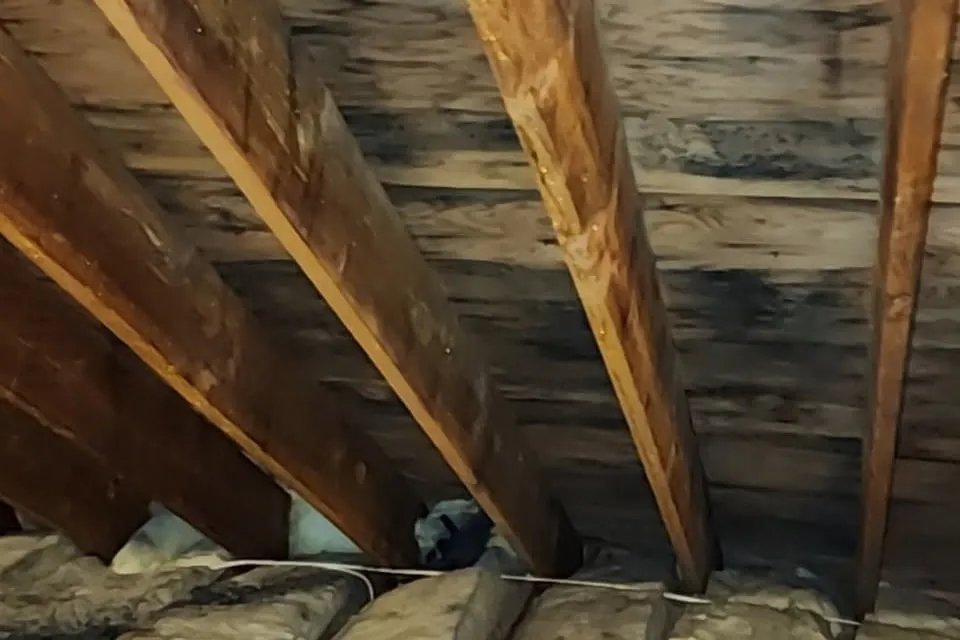
- Visible growth. Mold can look fuzzy, discolored or slimy, and the patches grow over time. It comes in many different colors.
- Water staining, warping or peeling on ceilings, walls, floors and trim.
- A leak or flood that wasn’t dried out quickly. The EPA says that if wet materials are dried within 24 to 48 hours, in most cases mold won’t grow. Anything that stayed wet longer deserves a closer look.
- Condensation that keeps collecting on windows, walls or pipes.
- High indoor humidity. The EPA recommends keeping indoor humidity below 60 percent, and ideally between 30 and 50 percent.
Don’t get hung up on the color or type of mold. Whatever is growing, the advice from health agencies stays the same: fix the water problem, then clean up or remove the growth.
What about health concerns?
Mold affects people differently. The NYS Department of Health lists allergy and irritation as the most common effects of mold exposure, with symptoms such as nasal and sinus congestion, itchy or watery eyes, coughing, wheezing, throat irritation, skin rash and headache. People with allergies, asthma or other breathing conditions, and people with weakened immune systems, can be more sensitive.
If you or someone in your home has symptoms, talk to your doctor, because those symptoms can have many causes besides mold. A mold assessment answers the other half of the question: whether the house has a mold or moisture problem that needs fixing.
What Happens During a Professional Mold Assessment
A good mold assessment is an investigation, not just a sample and a number. Here’s what our mold assessment process covers:
- Visual mold and moisture inspection. A detailed walkthrough to identify visible mold, moisture intrusion and conditions that promote mold growth.
- Moisture source detection. We map moisture and pinpoint where water is getting in or collecting, because moisture is the number one cause of mold growth.
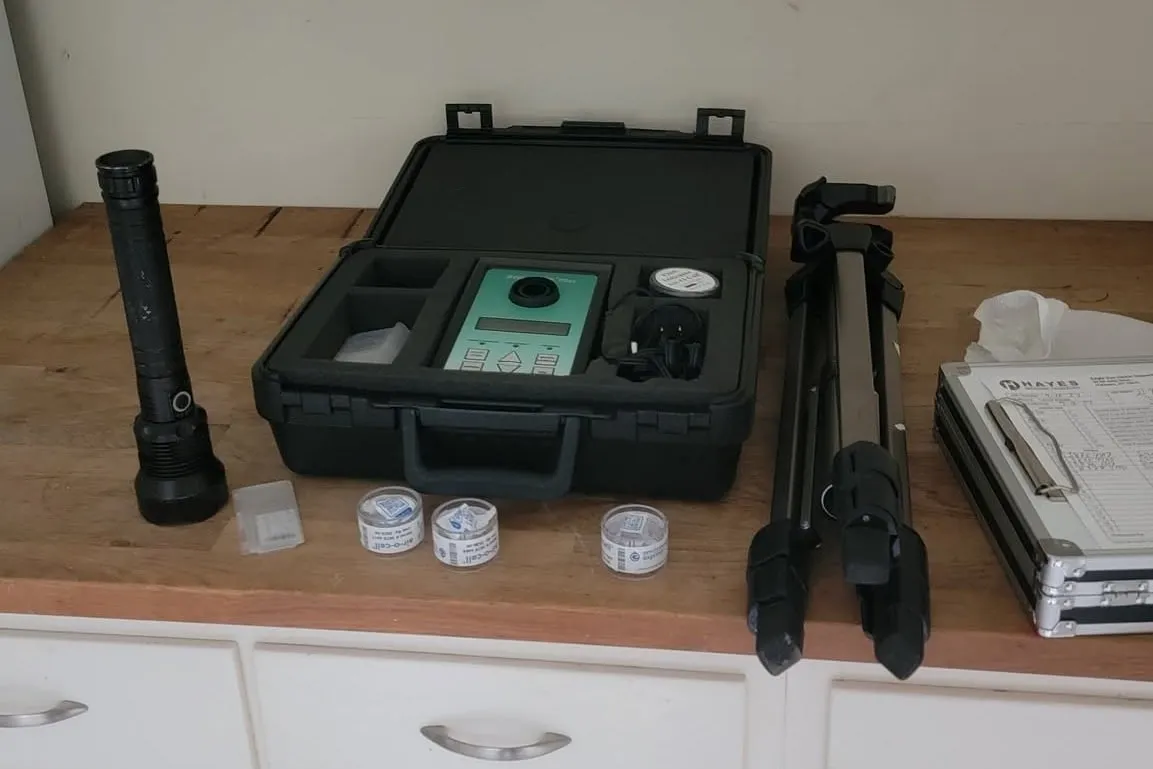
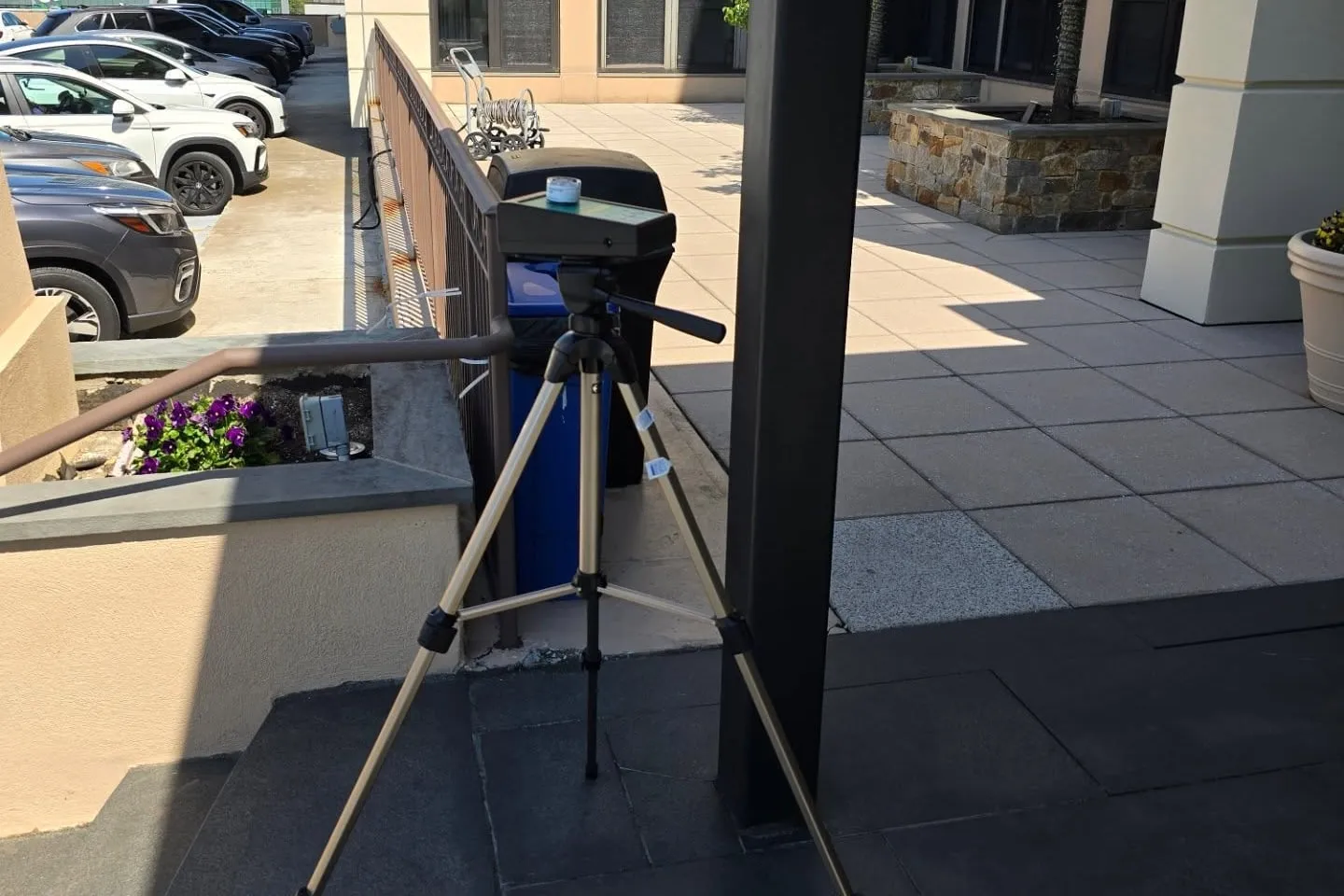
- Air sampling. Indoor and outdoor air samples let us compare the two and see whether mold spore levels inside are elevated compared with normal outdoor levels.
- Surface sampling. Swab or tape-lift samples from suspect surfaces help confirm what’s growing there.
- A detailed report. You receive a clear, easy-to-understand report outlining our findings, sample results and recommended next steps.
- Remediation recommendations. Clear guidance on what it will take to resolve the mold safely and effectively, along with moisture-correction strategies to keep it from returning.
- Post-remediation verification. After the cleanup, we come back for follow-up testing to confirm the remediation was successful. More on that below.
Experience matters most in step two. Lance Kotash, who owns Eagle Eye, brings over 30 years of hands-on experience in the trades, including time as a member of a local plumbers union. Finding moisture means understanding how water moves through roofs, plumbing and foundations.
Is mold testing always necessary?
Honestly, no, and it’s worth understanding why.
If you can already see mold, you usually don’t need a lab to confirm it’s there. The EPA says sampling is generally unnecessary when growth is visible, and there are no federal or New York State standards for an “acceptable” level of mold in a home. Mold is everywhere, so almost any sample will find some. A number on its own doesn’t tell you what to do. The moisture source and the extent of the damage do.
Sampling earns its place when it answers a specific question:
- Is a musty smell coming from hidden growth when nothing is visible?
- Are spore levels inside the home meaningfully higher than outside?
- Has a cleanup actually brought the area back to normal?
That’s why indoor air is compared against outdoor air, and why the EPA recommends that sampling be done by professionals experienced in designing it and interpreting the results.
Mold Assessment vs. Mold Remediation: Why an Independent Assessor Matters
People often use these terms interchangeably, but they’re two different jobs:
- Mold assessment is the investigation: inspecting a property to discover mold, the conditions that allow it to grow and the signs of those conditions, and defining what needs to be done.
- Mold remediation is the cleanup: removing, cleaning and disinfecting moldy materials, setting up containment, and handling the waste.
When one company does both, the company deciding how big your mold problem is would also be the one getting paid to fix it. Even with the best intentions, that’s a conflict of interest, and New York’s Department of Labor describes separating the two roles as protection against fraud.
What New York’s mold law requires
New York regulates mold work under Article 32 of the state Labor Law, administered by the Department of Labor’s Mold Program, which licenses the companies and workers who assess and remediate mold and sets minimum work standards. Here are the key points for homeowners, drawn from the department’s fact sheet, What to Expect When You Hire a Mold Assessor and Mold Remediation Contractor:
- The 10-square-foot line. The state doesn’t require you to clean up mold on your own property. But if you decide to have someone assess and remediate an area of mold larger than 10 square feet, you must use licensed mold professionals.
- Assessment comes first. A licensed mold assessor inspects the property and writes a Mold Remediation Plan. A licensed remediation contractor then does the work outlined in that plan.
- The plan is specific. It covers the areas involved, how much material needs to be cleaned or removed, the cleanup methods, the clearance criteria, an estimate of cost and time, and the underlying moisture source.
- Separate companies. Under New York Labor Law Section 936, no licensee may perform both mold assessment and mold remediation on the same property, and no one may own an interest in both the assessing company and the remediating company on the same property.
Homeowners doing mold work on their own homes are exempt from the licensing rules. Also, remediation contractors aren’t required to fix the moisture source if they lack the expertise, and the plan should recommend the type of contractor who can. Cleanup and repair can be two separate jobs.
Why we only assess
Eagle Eye doesn’t do mold remediation. Our job is to tell you what’s there, where the moisture is coming from and what needs to happen next. We have no cleanup to sell, so there’s no reason for us to make a problem sound bigger than it is, or to call it finished before it is. That’s the peace of mind we offer: an honest, unbiased answer from someone with nothing to gain from the outcome.
It helps in a practical way, too. Because our recommendations come from someone who isn’t bidding on the work, you can take them to the remediation contractors of your choice and compare quotes for the same scope. If you’re facing a larger mold problem, schedule your assessment before you start collecting remediation quotes.
Post-Remediation Verification: Don’t Skip the Clearance
Remediation isn’t finished just because the crew packed up. The visit after cleanup, called post-remediation verification or clearance testing, is how you know the problem is actually resolved.
Under New York’s mold law, once the remediation contractor finishes, the mold assessor performs a post-remediation assessment. According to the Department of Labor, the project is complete when the assessor issues a written passed clearance report stating that:
- the work area is free from all visible mold,
- all work was done according to the remediation plans, and
- the clearance criteria in the Mold Remediation Plan were met.
If the cleanup didn’t pass, the assessor writes a final status report listing what still needs to be done to receive a passed clearance report.
Two more points from the Department of Labor:
- Use the same assessor if you can. The state recommends having the assessor who wrote the Mold Remediation Plan do the post-remediation assessment, although it isn’t required.
- Skipping it means signing off on your own. If you decide not to have a post-remediation assessment, the assessor and the remediation contractor should get documentation that you accept the work as is.
For us, this is where an independent assessment pays off. We come back after remediation to verify the work was successful, with follow-up testing to confirm mold levels have returned to normal. The same company that found the problem, with no stake in the cleanup, confirms whether it has actually been resolved.
When to Call a Mold Assessor
Not every spot of mold needs a professional. Here’s how to tell the difference.
Times an assessment makes sense
- You’re buying a home. A musty basement, staining or a history of leaks is a reason to look closer before you close. Our home inspection covers the whole house, and Lance is licensed in New York as both a home inspector and a mold assessor.
- After water damage. A burst pipe, an appliance leak, a roof leak or a wet basement, especially if materials stayed wet for more than a day or two.
- You smell it but can’t find it. A persistent musty odor with no visible mold is a classic sign of hidden growth.
- The area is bigger than about 10 square feet, or mold keeps coming back after you’ve cleaned it.
- You suspect mold in your heating or cooling system. The EPA advises against running an HVAC system you know or suspect is contaminated, since it could spread mold through the house.
- Someone in the home is more sensitive. If a household member has asthma, allergies or a weakened immune system, talk with their doctor, and consider an assessment to find out whether the house has a mold or moisture problem.
- The cleanup is done. Post-remediation verification confirms the remediation worked.
When you probably don’t need us
A little mildew on shower grout, or a small spot on a windowsill where you know condensation is the cause, is usually a job for a scrub brush, not an assessor. The EPA says that in most cases you can handle an area smaller than about 10 square feet (roughly 3 feet by 3 feet) yourself: scrub hard surfaces with detergent and water, dry them completely, and fix whatever made the area wet. Porous materials like ceiling tiles and carpet may have to be thrown away. If the mold comes back, or you can’t find where the moisture is coming from, that’s the time to call.
Mold Assessments in Dutchess, Putnam and Westchester Counties
We provide professional mold assessments in the Hudson Valley for homeowners and buyers across three New York counties. In Dutchess County, that includes Poughkeepsie, Beacon and Fishkill. In Putnam County, we work in Carmel, Brewster and Cold Spring, and in Westchester County we serve White Plains and Yonkers.
Mold is common, and most mold problems can be fixed once you know where the water is coming from. If a smell, a stain or a leak has you wondering, book your mold assessment online, or send us a message and we’ll help you figure out the right next step. You can also see everything included in our mold assessment services.
Frequently asked questions
What is the difference between a mold assessment and mold remediation?
A mold assessment is the investigation: a licensed assessor looks for mold, finds the moisture feeding it and spells out what needs to be fixed. Mold remediation is the physical cleanup, done by a separately licensed remediation contractor. In New York, the same company cannot do both on the same property. Eagle Eye performs mold assessments only and does not do remediation.
Do I need a licensed mold assessor in New York?
If you hire professionals to deal with more than 10 square feet of mold, New York law requires a licensed mold assessor to inspect and write a Mold Remediation Plan before a licensed remediation contractor starts work. Homeowners doing mold work on their own homes are exempt from the licensing rules. For hidden mold, mold that keeps coming back or a larger area, a licensed assessor is the right first call.
Can the same company test for mold and remove it in New York?
No. Under New York Labor Law Section 936, a licensee cannot perform both mold assessment and mold remediation on the same property, and no one may own an interest in both the assessing company and the remediating company on the same property. The New York State Department of Labor describes the rule as protection against fraud.
Do I need mold testing if I can already see mold?
Usually not. The EPA says sampling is generally unnecessary when mold growth is visible, and there are no federal or New York State standards for an acceptable level of mold in a home. Sampling is most useful when it answers a specific question, such as whether a musty smell points to hidden growth or whether a cleanup worked.
What is post-remediation verification?
Post-remediation verification, often called clearance testing, is a follow-up assessment after mold cleanup to confirm the work was successful. In New York, a mold project is complete when the assessor issues a written passed clearance report confirming the work area is free of visible mold, the work followed the plan and the clearance criteria were met. Book it before the contractor takes down containment.
Should I get a mold assessment when buying a house?
It is worth considering when a home shows signs of past water problems, such as a musty basement, water staining, warped materials or a history of leaks. A home inspection looks at the whole house, while a mold assessment focuses on mold and the moisture behind it. Lance is licensed in New York as both a home inspector and a mold assessor.
Can I clean up mold myself?
Often, yes. The EPA says that in most cases you can handle a moldy area smaller than about 10 square feet yourself, as long as you fix the water problem and dry everything completely. Larger areas, mold in a heating or cooling system, and damage from sewage or other contaminated water are jobs for professionals.